
By Justine Hanson, Ph.D.
Senior Development Officer at American Bird Conservancy
American Bird Conservancy (ABC) is very grateful to the Amos Butler Audubon Society for twenty-six years of generous support for full life cycle bird conservation. Your strong commitment has made a difference for Neotropical migratory birds on their wintering grounds, as well as the Latin American conservationists who are working to restore for their habitats – thank you!
Your 2025 grant has enabled us to restore and manage key wintering habitat in the coffee growing region of the Caldas department in the Central Andes of Colombia for Cerulean, Golden-winged, and Canada Warblers, among other migratory bird species. We are deeply grateful for your multi-year support of this project — thank you for your commitment to the birds who rely upon the Colombia’s Central Andes for habitat!
Title, Goals, and Objectives of Project: Restoring & Preserving Habitat Corridors for Migratory Birds Across Four Watersheds in Colombia’s Central Andes BirdScape.
ABC has been working successfully in Colombia for more than 20 years to support the creation and management of bird reserves and ecological easements, to develop and promote bird tourism opportunities, restore degraded lands, and promote bird-friendly agriculture.
The Central Andes BirdScape is an important focal point for our work. BirdScapes are priority areas for bird conservation at the landscape level, ranging from 150,000 to 2.5 million acres. They often encompass working landscapes, where we engage communities, land managers, and landowners in restoring habitat and implementing sustainable land use practices and agriculture that incorporates the cultivation and conservation of trees.
The Central Andes BirdScape has experienced high rates of deforestation and severe fragmentation of forests, largely due to agriculture. It includes the coffee growing regions of the Caldas, Risaralda, Quindío, and Valle del Cauca Departments. Coffee plantations are recognized as a main habitat for migratory birds in Latin America. In Colombia, 87% of neotropical migratory bird species occur in agroecosystems and more than 70 of these species have been recorded in coffee systems, more than in any other agroecosystem.
In Caldas, there are multiple focal areas for Cerulean Warbler, Canada Warbler, and Golden-winged Warbler, as well as 74 other neotropical migratory bird species. Fortunately, there are several strong local institutions that are dedicated to promoting sustainable coffee production and maintaining a healthy landscape for people and biodiversity. Multiple agencies and groups are involved in restoring watersheds, implementing best management practices for coffee growing and processing, and conducting outreach to involve the communities in conservation.
In this region, ABC has been working with multiple partners, including public agencies and private companies, to develop the project PaSos Paisajes Sostenibles (Sustainable Landscapes). The partners are Corporación VivoCuenca, Fundación Ecológica Cafetera (FEC), Comité de Cafeteros de Caldas (CCC) and the Central Hidroeléctrica de Caldas (CHEC). The long-term goal of our project is to create healthy habitat corridors for neotropical migratory birds within coffee-growing landscapes throughout the Central Andes BirdScape. We are working in four watersheds: the Chinchiná River and Tapias-Tareas River watersheds in the Caldas department, and the Campoalegre River watershed in the border with Risaralda department, and La Vieja River watershed in the Quindío department.
The 2025 grant from the Amos Butler Audubon Society supported key partner staff roles. Your funds supported three Forestry Technicians (FT) and a professional biologist. The Forestry Technicians play a critical role in the project, serving as the main point of contact with the farmers, working to develop agreements with the famers, delivering trees, monitoring tree survival, and providing technical advice throughout the reforestation process. They also support the nurseries that provide the trees and participate in outreach activities. The biologist position supported the team during bird monitoring activities and workshops with local communities and landowners.
Project Completion: This is an ongoing project.
Measuring Effectiveness: We measure effectiveness by the number of trees planted and farmers engaged. In our 2025 proposal to Amos Butler Audubon Society, we identified the goal of producing and planting 30,000 trees and engaging at least 80 farmers in conservation activities.
Degree of Attained Goals: During the period of the project we planted approximately 32,000 trees and engaged 72 new farmers. Since the beginning of our project in 2019, we have planted more than 270,000 trees and installed 10.5 miles of fences to recov
ker and protect more than 2,800 acres. All the trees planted have been produced in nurseries supported by the project or from partners, including the Mujeres Cafeteras—Women Coffee-Growers—group and nurseries managed by the local community.
As part of the support provided by this grant, Forestry Technicians Yerson Franco, Vanessa Martinez, and Nicolás Londoño negotiated with landowners to plant 23,103 native trees on 68 properties. These negotiations resulted in planting agreements between the project and the landowners that define the responsibilities of each party, as well as the support to be provided by the project and the Forestry Technicians. In addition, the team delivered 16,051 native trees to 75 properties for planting. These deliveries included 95 different native plant species.
We continue conducting monthly events such as birdwatching activities with the landowners and their families, as well as schoolchildren and other local groups. We are working with birdwatching clubs in La Nueva Primavera and San Peregrino. Children and teenagers from these clubs are currently participating in the migratory bird monitoring that we conduct annually. The 2025-2026 season started in November 2025 and will extend until the end of February. We have recorded a total of 257 species including 25 migratory bird species, including Canada and Cerulean Warbler.
Problems Encountered: Last year was challenging due to administrative changes within VivoCuenca, one of our partners and the organization leading Proyecto PaSos. VivoCuenca is a water fund whose establishment and much of its funding depend on government entities. As a result of political changes and shifting government priorities, the organization was significantly affected. This included reductions in government funding and changes to hiring processes, which in turn affected both the project’s objectives and the timely implementation of activities.
In January 2026, we learned that VivoCuenca will shut down; however, the organization has committed to completing its ongoing projects, including finishing the current NMBCA grant, which runs through June 2026. ABC is eager to see the Proyecto PaSos project continue, with new leadership. The larger Proyecto PaSos partners are committed to continuing, however, they will need to form a new conservation organization to assume leadership of the project. With strong project success to date and infrastructure in place, ABC believes this is a viable solution. ABC staff have met with the Proyecto PaSos project’s coordination team to explore alternatives for continuing implementation in the medium and long term, including the creation of a new organization and the possibility that another partner organization will assume leadership of the project.
Opportunities for Enhancement: Our partners continue to be part of the regional network called Red Caldense de Viveros para la Conservación—Network of Nurseries for the Conservation of Caldas– that includes nurseries managed by governmental and private institutions, as well as those managed by community groups and individuals. This network is focused on the restoration and reforestation activities in the department. In addition, VivoCuenca and the PaSos project have been working closely with another ABC partner, SELVA, in the Alcazares-Planalto Conservation Corridor near Manizales. This area was prioritized by Partners in Flight in the Conservation Investment Strategy for the Mid-elevation Forests in 2024.
Additional Funding/Partnerships Since Initiation of Project: The Neotropical Migratory Bird Conservation Act (NMBCA) Program has been the project’s primary funder over the past six years; however, due to changes in federal government funding, it is uncertain whether this support will continue. We are awaiting new guidance from the U.S. Fish and Wildlife Service regarding the NMBCA Program. The current grant ends in June 2026. Since 2020, the Southern Wings Program of the Association of Fish and Wildlife Agencies, through the states of Tennessee and Virginia, as well as Kentucky, Ohio, and Michigan via the Mississippi Flyway Council, has provided limited support to this project to complement NMBCA funds. We expect this support to continue in the following fiscal year.
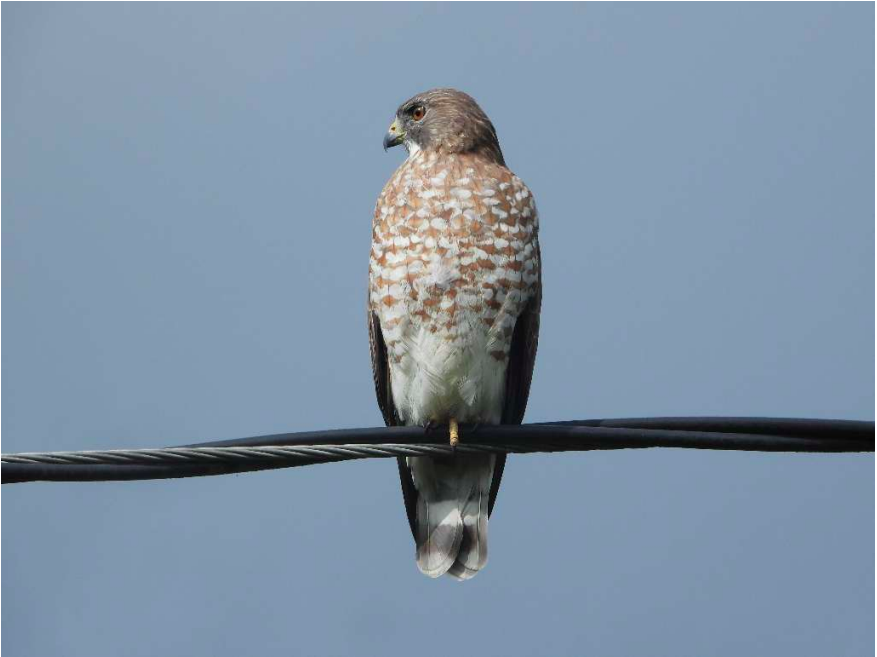
Broad-winged Hawk by Juan Felipe Becantur