
By Andy Belt
Senior Environmental Manager at Indiana Department of Environmental Management, Office of Air Quality
Introduction
After spring migration winds down and before fall migration begins, birders turn their attention towards another nature identification hobby. This could be herpetology or “herping” (reptiles and amphibians), mycology (mushrooms), or botany (plants), but more often than not, it’s entomology or the study of insects. But what are insects?
Insects belong to the group known as arthropods, which includes invertebrates that possess a hard exoskeleton made of chitin, a segmented body, and paired jointed appendages. This includes but is not limited to butterflies, moths, bees, wasps, flies, dragonflies, and beetles.
While there are over 10,000 identified bird species, there are more than a million described species of insects, with beetles alone numbering 386,000 species. So, it goes without saying that insects comprise a significant amount of Earth’s biomass.
Ecosystem Roles
Insects provide important ecosystem services, especially pollination. Insects pollinate roughly 80% of angiosperms, or flowering plants. That includes much of what we consume as food and drink as well as what clothes we wear everyday. If you’re drinking your morning coffee and wearing a cotton shirt while reading this, you can thank a pollinator!
In the United States alone, pollination as an ecosystem service has been valued at 10 billion dollars USD annually. Pollinators not only include bees and butterflies, but also moths, ants, and flies. The services these insects provide are invaluable to humanity.
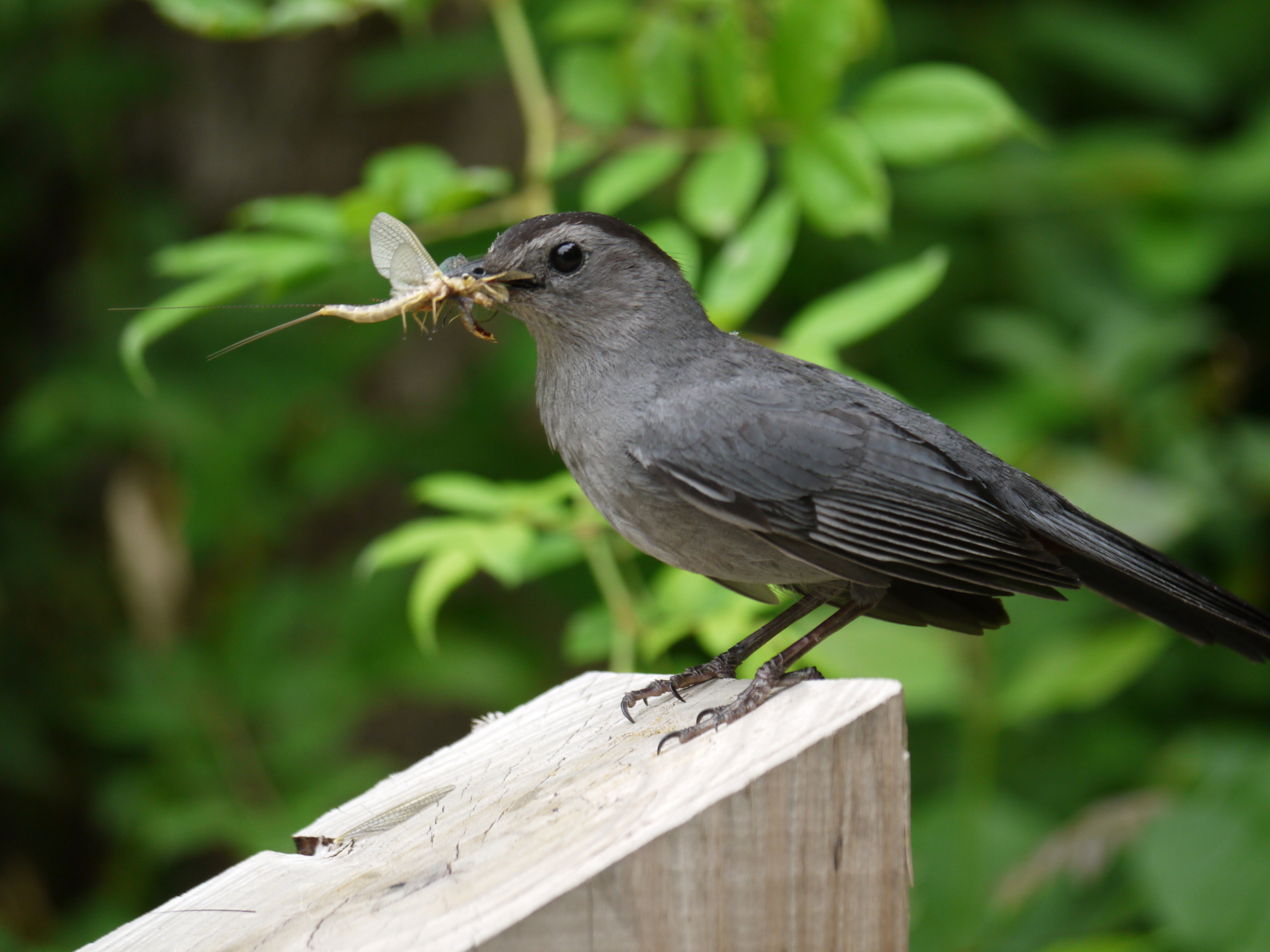
Insects are also an important food source for birds. Worldwide, insectivorous or insect-eating birds consume between 400 and 500 million metric tons annually, especially during the breeding season.
Birds will time their nesting with the peak abundance of insect prey because their young require plenty of nutrients to grow quickly. One key nutrient, omega-3 fatty acids, is found more so within aquatic than terrestrial insects. Therefore, it should come as no surprise that the massive annual emergence of mayflies has been estimated to support over 53 million nestlings. The short, explosive timeframe of this and other seasonal emergences are crucial for the survival of many of our charismatic bird species.
Insect Declines
Insect declines have become more and more apparent over the last few decades. Gone are the days when your car’s windshield and front bumper would be smeared with dead insects, in what’s been coined as the “windshield phenomenon.” While habitat loss is partly to blame, the widespread use of pesticides, such as dichlorodiphenyltrichloroethane (DDT) and other insecticides, have further accelerated declines.
Rachel Carson wrote in her formative book Silent Spring that “sprays, dusts, and aerosols are now applied almost universally to farms, gardens, forests, and homes – nonselective chemicals that have the power to kill every insect, the ‘good’ and the ‘bad’…should not be called ‘insecticides’ but ‘biocides’.” While DDT was banned on June 14, 1972, thanks in large part to Carson’s efforts, other insecticides have taken its place and are still used indiscriminately.
When insects are in decline, birds aren’t far behind, and climate change is only narrowing the gap. As mentioned previously, birds align their nesting with the peak insect emergence; however, warming spring temperatures have advanced that emergence by 3-12 days. This has been determined from observations spanning from 1989 to 2014.
An earlier and shorter insect emergence negatively impacts a nesting season. The same study determined that many of our common backyard birds, including Eastern Phoebes, Eastern Bluebirds, and House Wrens, struggle to advance their egg lay dates to keep up with their prey. This mismatch in timing could adversely impact birds that nest later in the season as well as birds that have multiple broods.
Call to Action
In light of this situation, what can we as birders do to help reverse these declines? This may seem daunting, but it can start at home. Doug Tallamy, author of Nature’s Best Hope, writes “it is easy to create landscapes in which [insects] actually flourish. All we need to do is include more of the right kinds of plants in our landscape designs.”
Converting some of your landscaping to include native plants is a great first step. Native plants offer more for insects than what non-native cultivars or even native cultivars (“nativars”) can provide. While adult insects can feed from a variety of nectar sources, native plants are required for their reproductive cycle. For example, Monarch Butterfly caterpillars can only feed on milkweed (genus Asclepias) leaves.
Native plants not only serve as the foundation for an insect’s reproductive life cycle but also for a bird’s. Native flowers and shrubs are also a great way to attract hummingbirds and frugivorous, or fruit-eating, songbirds
Another easy way to promote insect diversity is to not rake and bag leaves. Fallen leaves not only give back nutrients to your soils but are also shelter for overwintering insects, such as butterflies, moths, and bees. Caterpillars may also find shelter under fallen leaves, which in turn provides a smorgasbord for both nestlings and overwintering birds.
Taking these simple steps can ensure we not only promote insect abundance and diversity but also promote avian conservation.