By Isaac Traynor, Photos by Katilynn Burke
Sometimes I wish I could go back to being a new birder. The excitement of knowing you will likely see new birds (life birds) every time you go out. And with changing seasons and new species groups arriving, that excitement continues throughout the year.
But, being a new birder can be daunting too. Where do I go? When do I go? What habitats should I go to? All these questions and more were ones I asked myself when I was a beginning birder. Now that I have a few years of experience birding Indiana and the Indy area, I hope to answer some of these questions for new birders. I will take you through the seasons of a beginning birder’s first year in the Indy area.
Throughout this article, I will mention some of the most popular hotspots. I want to stress that there is so much more out there than I could possibly cover in this short article. I am still discovering new birding hotspots myself. I recently discovered a new hotspot near where I work, and I have been going there during my lunch hours. It’s not much: just a tiny four-acre preserve in the city (Watson Road Bird Preserve). But I have already seen lovely birds there including a Palm Warbler, Eastern Phoebe, a mated pair of Red-tailed Hawks, and the brightest Yellow-bellied Sapsucker I have ever seen. The moral of the story is to go birding wherever you can. Even small parks and preserves will have great birds to see. If you see me on the trail, let me know your favorite places!
Spring
A birder’s first spring migration is a special time. Neotropical migrant songbirds fill the treetops, shorebirds cover mudflats and flooded farm fields, and species of all kinds return to Indiana for breeding. The Indy area has a wide variety of habitats that allow birders to find all types of these amazing birds.
Because of how fleeting spring migration may feel, it can be common to get “analysis paralysis” when choosing where to go birding on any certain day; the fear of missing out can be strong! Luckily, it’s hard to go wrong in spring with the volume of migrating birds.
When in doubt, Eagle Creek Park is a great option. Eagle Creek has a variety of habitats including forest, prairie, and wetlands. The Marina, North Loop (northernmost loop of the Red Trail), and Ice Skating Pond are some of my favorite locations for migrating and nesting songbirds including the many warblers, vireos, flycatchers, orioles, and tanagers. On the West Side of Eagle Creek Reservoir, Eagle’s Crest Prairie is excellent grassland and scrub habitat for an abundance of prairie birds including Prairie Warbler, Yellow-breasted Chat, and Henslow’s Sparrow.
While Eagle Creek is one of the most popular birding hotspots in the Indy area, there are so many more places to explore. Cool Creek Park in Hamilton County, Thornwood Preserve in Hancock County, and Starkey Park in Boone County are among the most popular in the donut counties. These are lesser known, but I also personally really like University Park in Johnson County and Avon Town Hall Park in Hendricks County.
As I said, springtime is also a time for shorebirds. Sometimes shorebirds can be found at eBird hotspots, but often they are found in flooded farm fields. “Fluddle” is a portmanteau of “flood” and “puddle”, and it refers to the large puddles that dot farm fields after heavy rain. They are a big attraction for migrating shorebirds. As you bird more and more, you will find there are often somewhat reliable places where fluddles and shorebirds occur in the spring. Drive around and see what you find! Because fluddles have great birds but no formal parking area, avoid stopping on busy roads and always turn on your hazards when pulling over onto the shoulder.
Summer
After the high of spring migration, the doldrums and heat of summer can be a little disheartening. However, while many spring migrants have continued north, there are still plenty of species that nest and spend their summers in Indiana. One of my favorite summer walks is the ECP Bird Sanctuary loop and seeing the many Northern Yellow Warblers that have nested in the trees along the path. Summer is a season when early morning birding is a must. The heat of summer can be draining after an hour or more of birding, and birds are much less active in the afternoon heat. Always remember to stay hydrated!
Certain species groups start their migration south earlier than others. Many shorebirds start migrating in early August, so keep an eye on those fluddles. August thunderstorms produce excellent but quickly evaporating habitat for these early migrating birds.
Fall
Pro of Fall: Migrants are back!
Con of Fall: Many of them look the same because they are in their non-breeding plumage. Boooooo.
Fall birding brings new identification challenges for new and seasoned birders alike. It can be frustrating. It was, and still is, for me! Learning to notice more subtle differences is important. You will make mistakes; I sure as heck did/do. Keep at it and the subtle differences of fall plumage become easier and easier to see.
The where and when of fall birding is similar to spring, so I will keep it brief. Maybe take the opportunity to explore new hotspots you didn’t get a chance to visit in the spring. A personal favorite of lesser-known birding hotspots is Juan Solomon Park in Marion County, which is quietly a productive place for warblers and other migrating songbirds.
On the shorebird front, while the water level in Eagle Creek Reservoir is usually too high for mudflats in the spring, water levels decrease in the summer exposing productive fall mudflats west of the Coffer Dam (Bird Sanctuary loop) and north of the northern Red Trail loop.
Winter
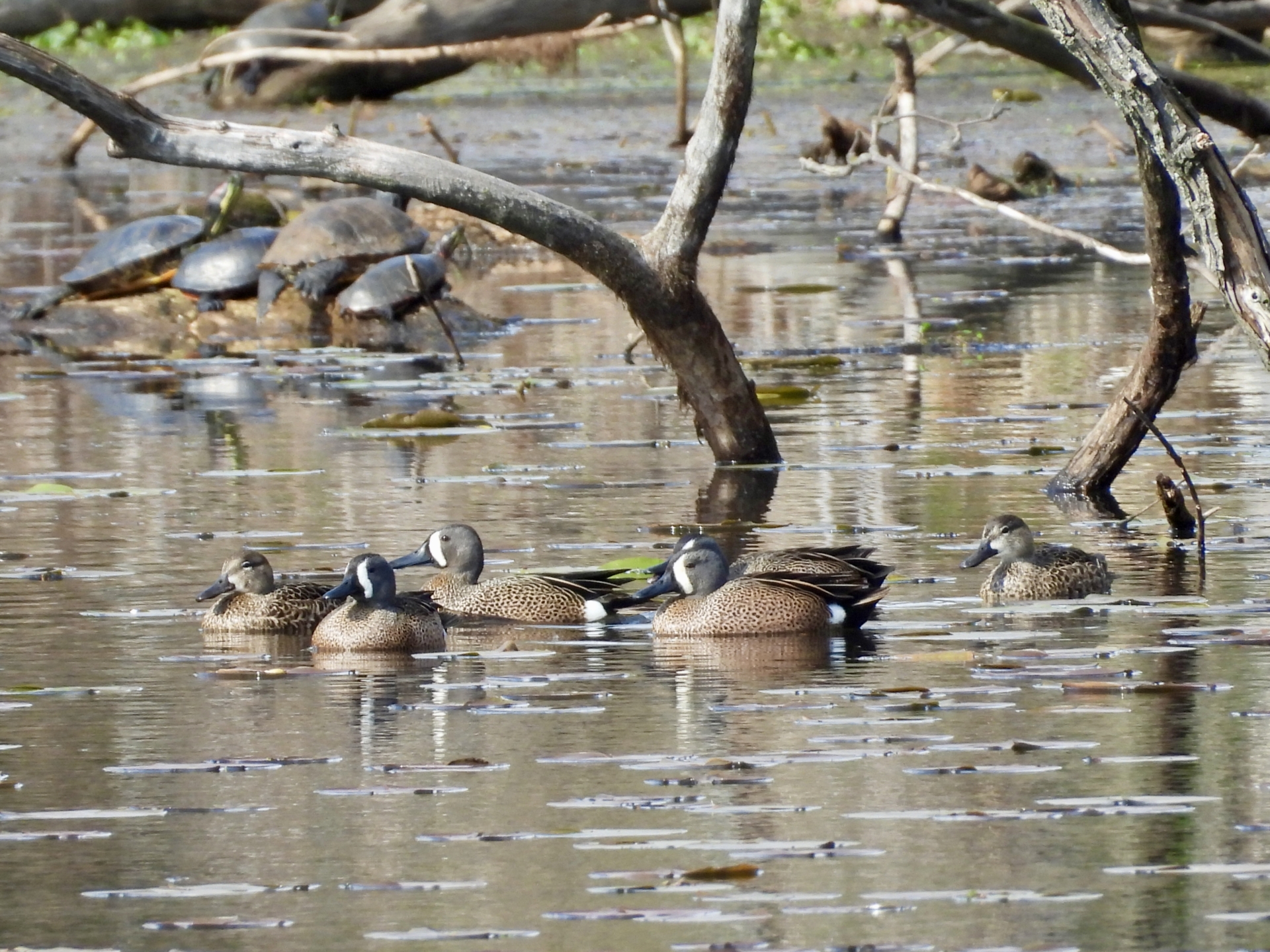
Bundle up! Because even though it’s cold, there is a lot of birding to be done. When I think winter birding, I think waterfowl. Many duck and geese species spend their winters in Indiana.
One thing that is refreshing after fall migration: even though waterfowl can bring their own set of ID challenges, they aren’t bouncing around branches and hiding behind leaves. Waterfowl often give birders unobstructed views (when they aren’t diving) and do not move very quickly (compared to warblers!).
In the Indy area, the three large reservoirs—Eagle Creek (Marion County), Geist (Marion and Hamilton Counties), and Morse (Hamilton County)—attract much of the area’s waterfowl. There are many viewpoints along the shores of each to see the rafts of ducks; exploring the eBird hotspot map can help you find some.
One of my favorite winter routines is birding the eastern shore of Eagle Creek Reservoir starting in the south at Rick’s Boatyard Café and working my way north to Hobie Beach, to Eagle Creek’s Beach, Marina, and ending at the Ornithology Center overlooking the Bird Sanctuary. Don’t just stick to the large reservoirs though; cool ducks and geese are often found on subdivision lakes and shopping center retention ponds. When it gets particularly cold and below freezing for extended periods, waterfowl will concentrate where there is still open water on lakes and reservoirs, so look for those spots.
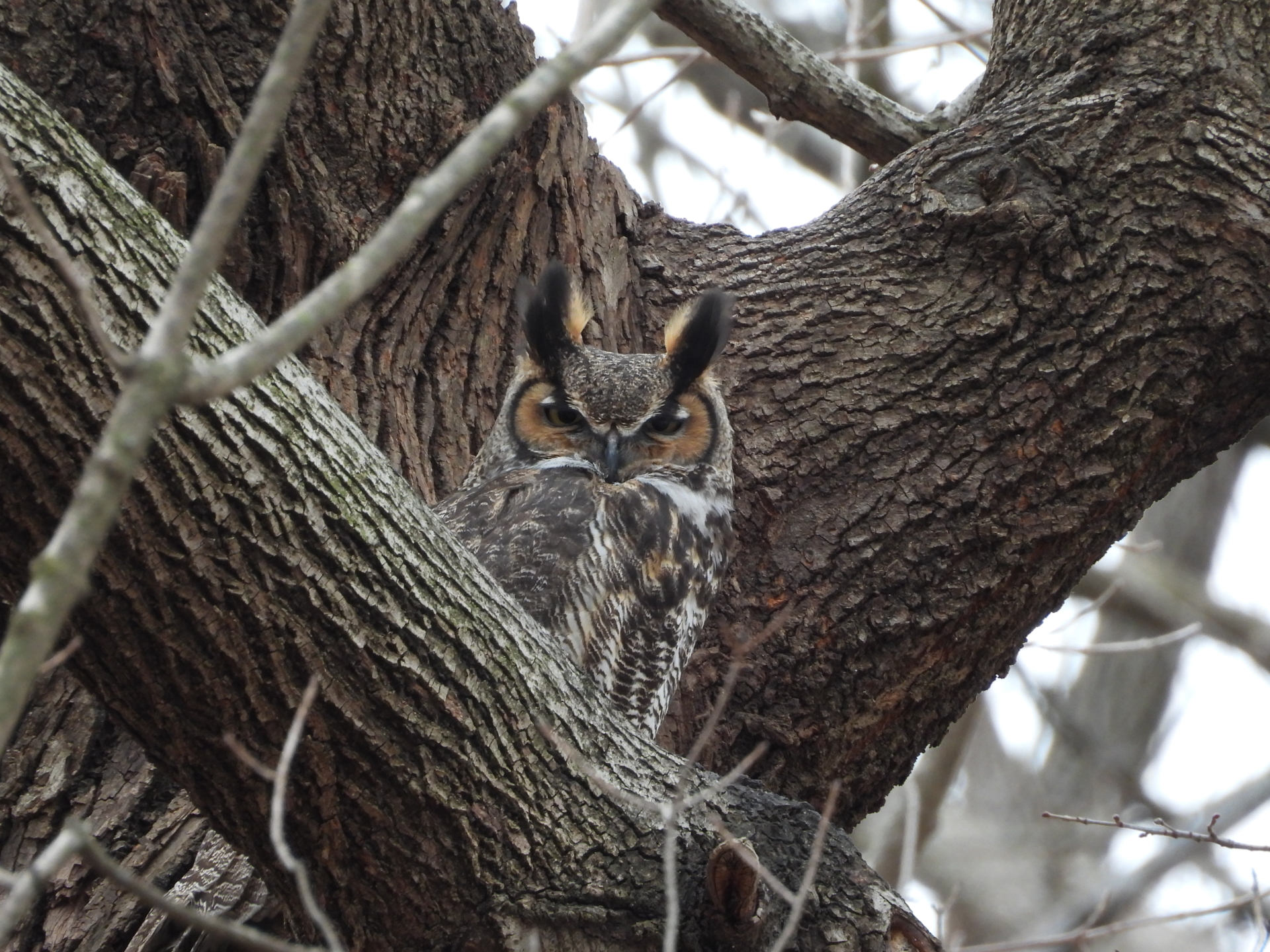
But winter isn’t just about waterfowl. Wintering raptors like Short-eared Owl and Rough-legged Hawk also return to Indiana. Short-eared Owls are a very popular late fall and winter target. Unlike many owls in Indiana, they start hunting while it is still light out, often right before or after the sun sets. This allows birders to catch stunning views of them in the ephemeral “golden hour” lighting.
Around Indy, the fields of the Indianapolis Regional Airport (Hancock County) are a reliable spot. When I am looking for Short-eared Owls, I like to arrive at a place about 15-30 minutes before sunset. This gives you time to see Northern Harriers hunting the same fields and then, hopefully, see the transition from Harriers to Shorties. Because Short-eared Owls roost on the ground, they often seem to appear out of nowhere, as if by magic. And a magical bird they are.
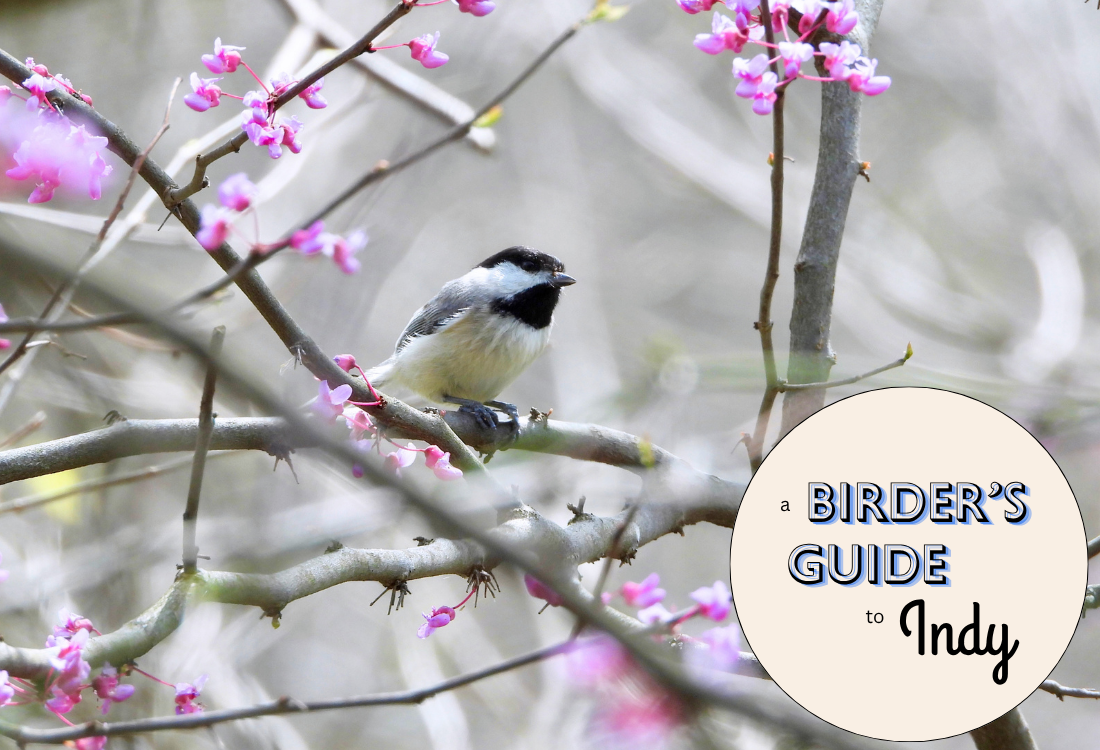
Finally, we can’t forget about our resident birds! Winter is a good time to be reminded of our year-round Indiana resident species: woodpeckers, chickadees, titmice, and cardinals among others. If you find yourself growing weary of duck ID, a quiet forest walk to see our resident birds can be very relaxing. While early morning can be the best time for birding during other times of the year, I have found that, like me, the birds seem to like the sun to come out a bit before becoming more active.
***
In closing, hopefully after reading these tips beginning birders find themselves a bit more prepared to take on spring and the coming seasons of their first (or second, or third) year of birding. The most important thing is to just get out there and see what you find. Find hotspots near where you live. You never know what you might see, and I have found that finding old birds in new places or with new people is just as joyous as finding lifers in the first place.
Good luck and happy birding!