By Ben Miller
Executive Director, Mud Creek Conservancy
ABAS donated $5,000 to Mud Creek Conservancy for native habitat restoration at Blue Heron Nature Preserve.
Drive through much of Marion County and the landscape feels familiar: flat farmland turned subdivisions, straight roads, and the steady rhythm of commercial corridors. But head northeast toward the Fall Creek and Mud Creek valleys and something begins to change. The land rolls and folds. Ravines drop into wooded hollows. Creeks carve steep banks beneath towering trees.
For many visitors, the experience feels surprisingly out of place, more like the wooded hills of Southern Indiana than the Central Indiana plain.
Some locals jokingly call it “the Brown County of Central Indiana.” Whatever the analogy, the feeling is real. This corner of Marion County is different.
The reason lies in the landscape itself.
A Landscape Carved by Water
Thousands of years ago, glaciers covered most of Indiana, leaving behind the broad, relatively flat landscape that defines much of Central Indiana today. In portions of the Fall Creek and Mud Creek watersheds, however, powerful glacial meltwater carved deeper valleys and ravines into the landscape. These meltwater channels, combined with uneven glacial deposits, created the rolling hills, wooded slopes, and creek valleys that make this corner of Marion County feel so different from the surrounding flatlands.
Fall Creek, Mud Creek, and its tributaries continued carving their way through glacial soils over thousands of years creating pockets of topography rarely seen elsewhere in Marion County.
Where the terrain varies, habitats multiply.
A Patchwork of Habitats
Within just a few miles, the Fall Creek and Mud Creek valleys contain a remarkable range of ecosystems: upland forests, floodplain woods, wetlands, meadows, and riparian corridors along the creeks themselves.
Each habitat supports different plants and animals, creating a web of ecological relationships richer than one might expect within a major metropolitan area.
The forests, many of which grow along slopes too steep for historic farming, contain mature trees such as oak, beech, Tulip Poplar, and Sycamore. These forests provide nesting habitat for woodland birds including Wood Thrushes, Barred Owls, and Pileated Woodpeckers.
Along the creeks, wetlands and floodplain forests support amphibians, turtles, and migratory birds that rely on healthy waterways during their seasonal journeys. Native meadows and forest edges attract pollinators, butterflies, and seed eating birds, adding another layer to the ecosystem.
Together, these habitats function like an interconnected neighborhood for wildlife. At the center of it all is water.
The Creeks as Wildlife Corridors
Healthy streams do more than carry water through the landscape. They shape entire ecosystems.
Mud Creek and Fall Creek function as ecological corridors, allowing wildlife to move through the landscape while also guiding birds during migration. For many species traveling north and south each spring and fall, these wooded creek valleys provide some of the only continuous habitat remaining within the urbanized portions of Marion County.
Birders are beginning to take notice.
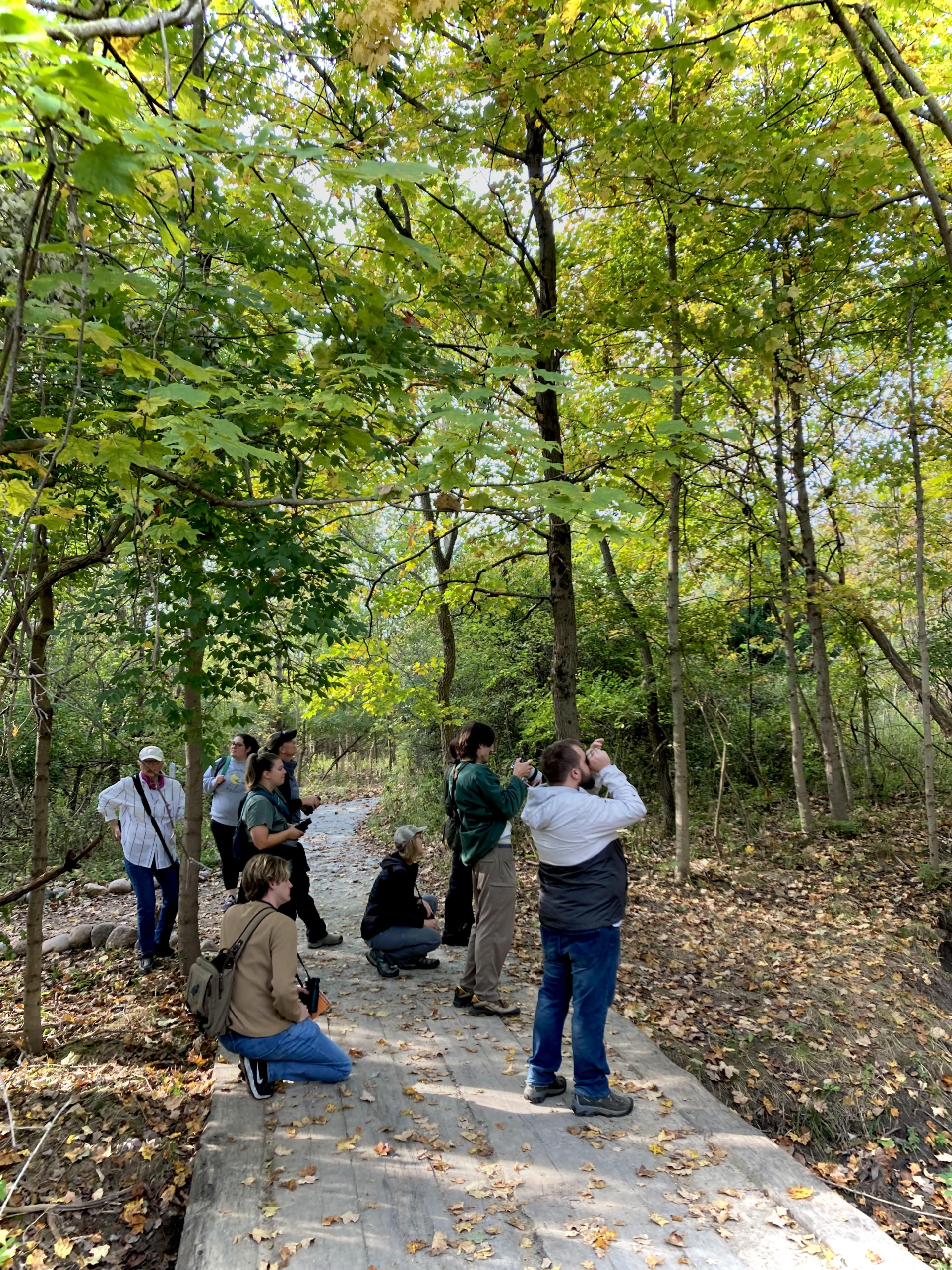
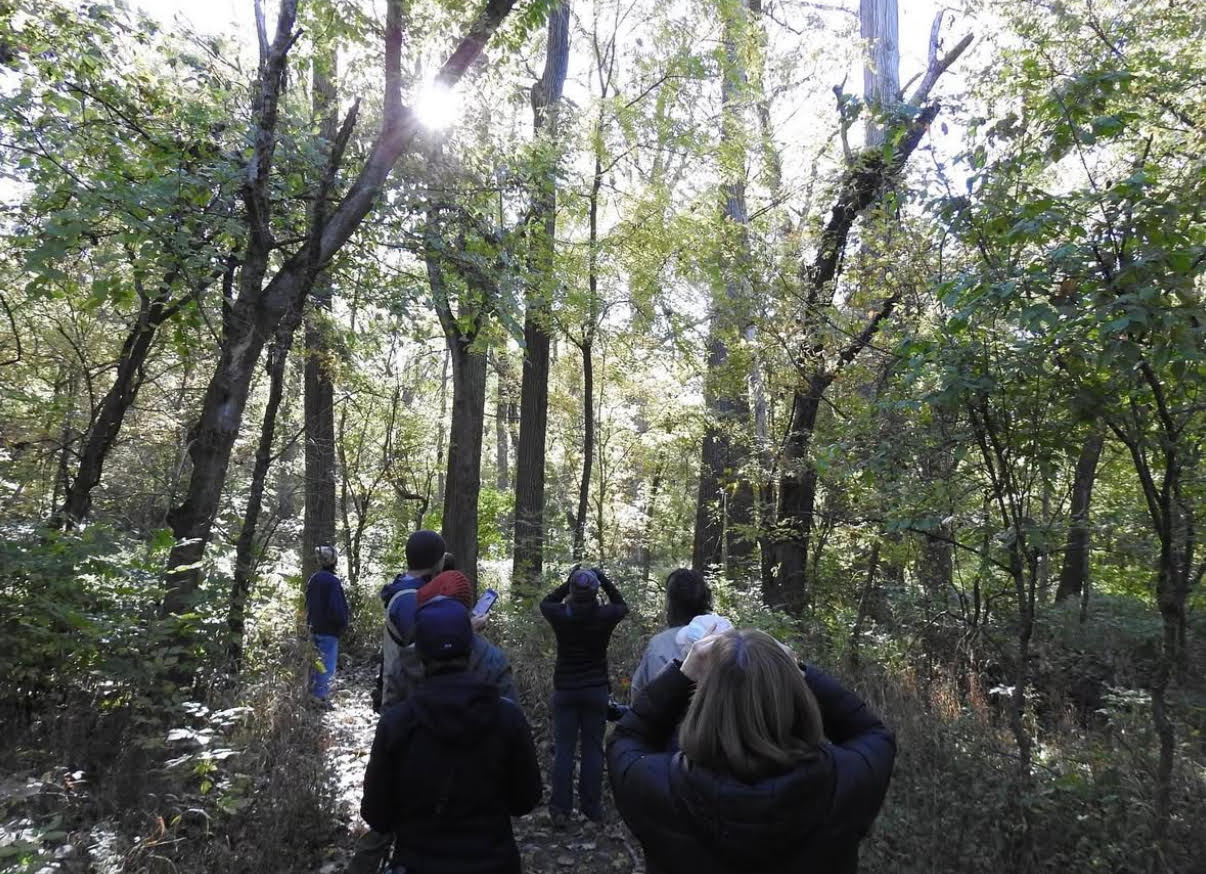
During spring migration, warblers, vireos, thrushes, and tanagers move through the forest canopy, stopping to rest and feed before continuing their journey. A single morning walk along the creeks can reveal dozens of species.
During the annual Amos Butler Audubon Society Birdathon in 2025, a team made up of Mud Creek Conservancy Executive Director Ben Miller, his family, and naturalist Wes Homoya documented more than 75 bird species in just 24 hours while birding a single location along the Mud Creek Corridor(MCC) during peak migration. The diversity they observed reflects the ecological value of these forested waterways.
A Forest Corridor Hidden in Plain Sight
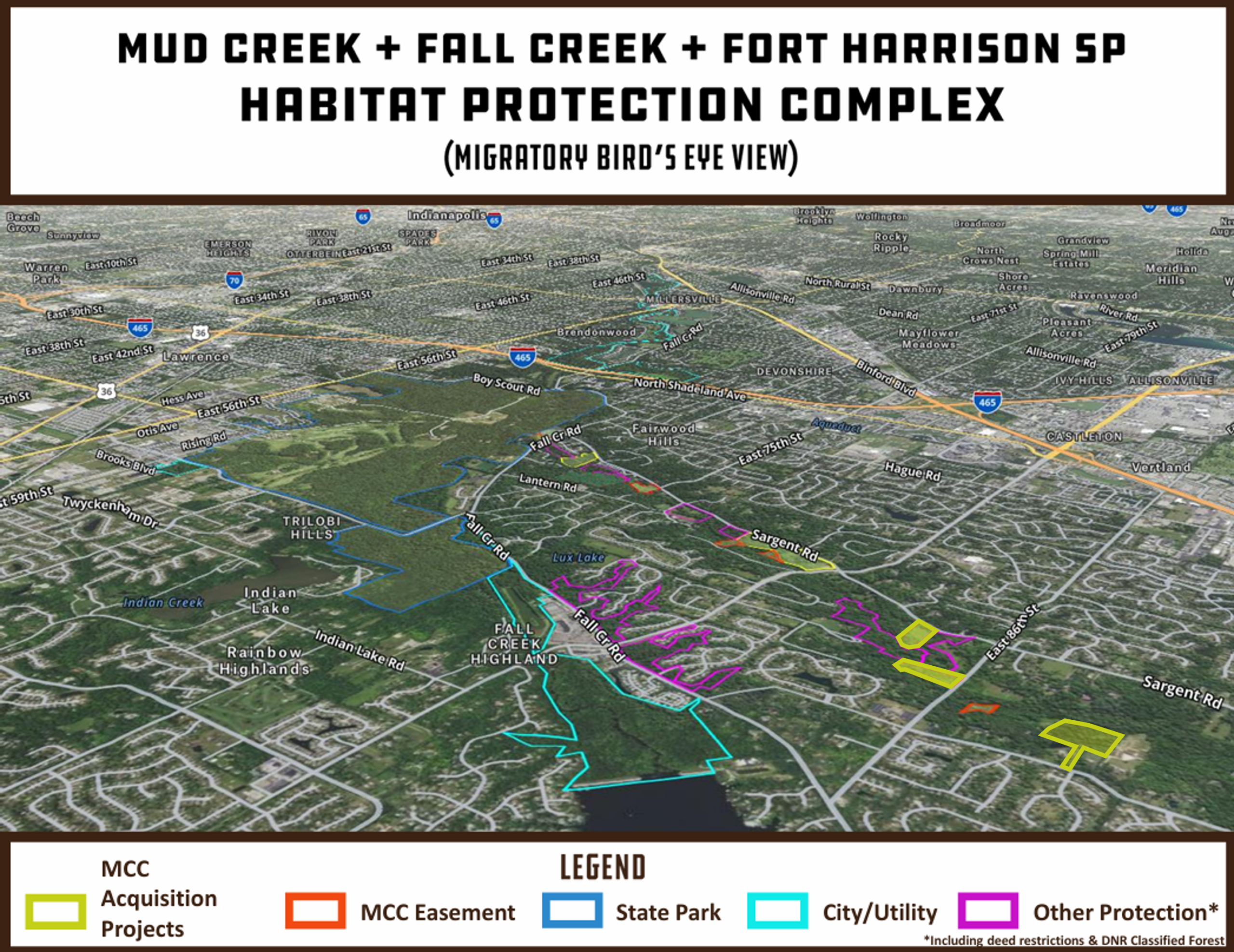
Part of what makes this area so special is that the forests are not confined to a single park. Instead, they form a broader landscape scale network stretching across northeast Marion County.
The Mud Creek Corridor includes more than 1,000 acres of forest, much of it tucked quietly between neighborhoods, along creek valleys, and within privately owned woodlands. These forests connect with larger protected landscapes such as Fort Harrison State Park, which preserves more than 1,700 acres of woodland and meadow habitat along Fall Creek.
Further downstream, the Fall Creek Greenway follows the creek through wooded parks, utility corridors, and residential forests that collectively provide additional habitat and connectivity for wildlife. Nearby water bodies such as Geist Reservoir and Indian Lake add further ecological diversity, offering open water habitat and resting areas for migrating waterfowl.
Together, these forests, waterways, and wetlands form one of the most significant remaining urban habitat complexes in Indianapolis.
Yet much of it remains vulnerable. Nearly 900 acres of the Mud Creek Corridor’s forests are still privately owned and at risk of development. Protecting these remaining forests has become the central focus of Mud Creek Conservancy’s conservation work, helping ensure that the ecological integrity of the watershed, and the wildlife that depend on it, can endure into the future.
A New Urban Birding Destination
One of the newest opportunities to experience this landscape is Sargent Road Nature Park, a 26 acre preserve along Mud Creek in northeast Indianapolis.
The property was acquired by Mud Creek Conservancy in 2021 and opened to the public in 2024, protecting mature forests, wetlands, and stream habitat while creating new opportunities for hiking, birdwatching, and environmental education.
Despite being located within the city, the preserve has already proven to be a remarkable hotspot for wildlife. More than 118 bird species have been documented at Sargent Road Nature Park, including migratory songbirds, raptors, waterfowl, and year-round forest residents.
For birders and nature lovers, the park offers a new chance to experience a variety of habitats without leaving Indianapolis.
Just a few miles downstream along Mud Creek, Mud Creek Conservancy is also working to open Blue Heron Nature Preserve, another forested preserve that will expand public access to the watershed’s natural areas. Restoration work is already underway at the site, supported in part by an Amos Butler Audubon Society Birdathon grant for invasive removal and native habitat restoration.
To help complete the project, Mud Creek Conservancy is currently running a matching campaign from April 1 through June 1, during which all donations toward Blue Heron Nature Preserve will be matched up to $50,000.
Discovering a Hidden Natural Gem
Today, more people are beginning to discover what has long been quietly thriving along the creeks of northeast Indianapolis.
Rolling wooded hills. Clear streams winding through forested ravines. Migrating birds moving through the treetops each spring and fall.
It is a landscape shaped by water, time, community stewardship, and a fortunate measure of preservation.
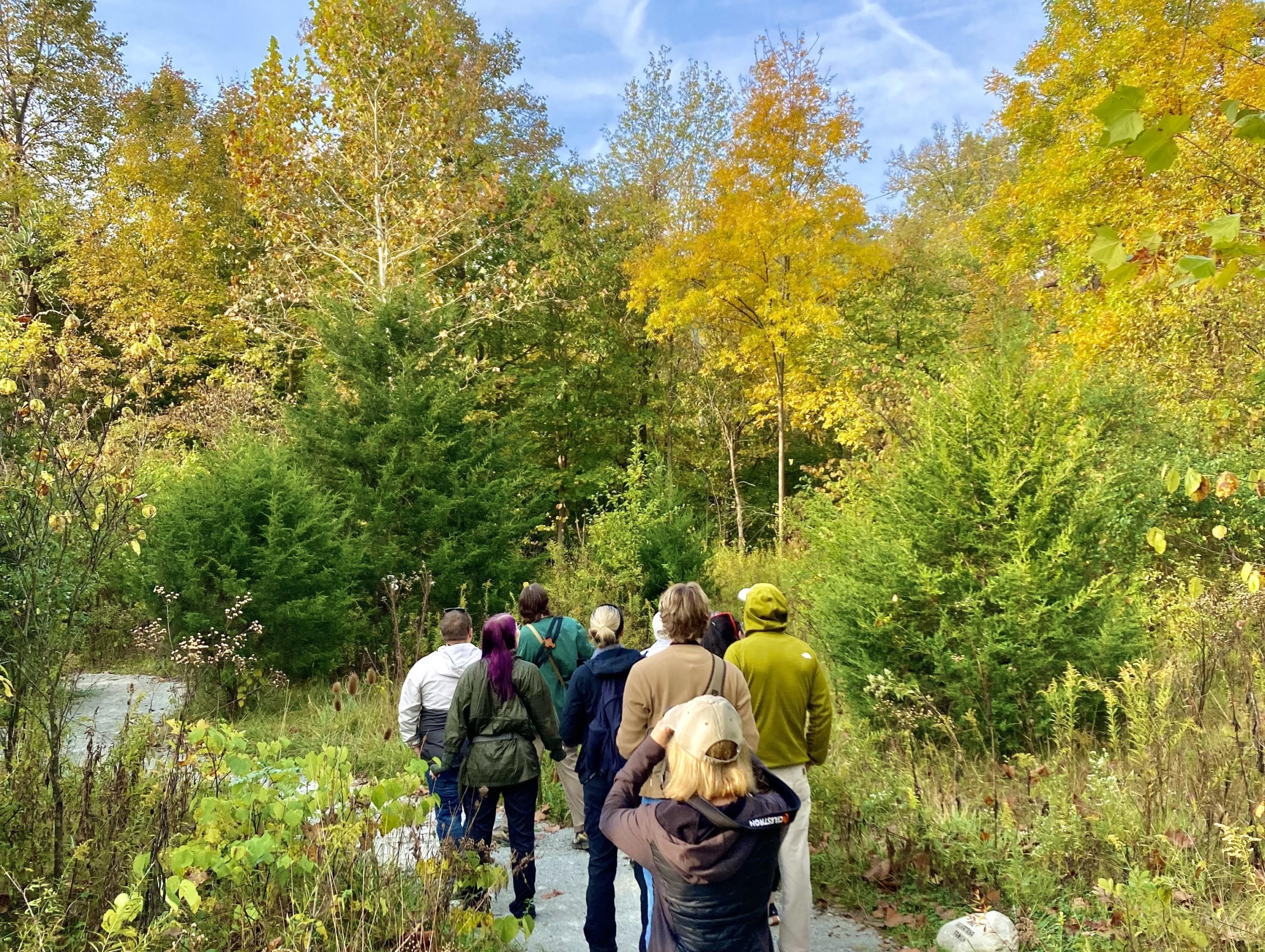
For those curious to experience it firsthand, Sargent Road Nature Park offers an ideal starting point. Trails wind through meadows, young forests, and floodplain woods along Mud Creek, providing visitors with a chance to explore one of the most ecologically rich corners of Marion County.
To learn more about MCC, get involved or contribute visit: MudCreekConservancy.org