By Brad Bumgardner
Executive Director at Indiana Audubon
Some people shape a community by founding organizations or discovering rare birds. Others shape it simply by showing up, week after week, year after year, and inviting others in.
Alfred “Bud” Starling did the latter.
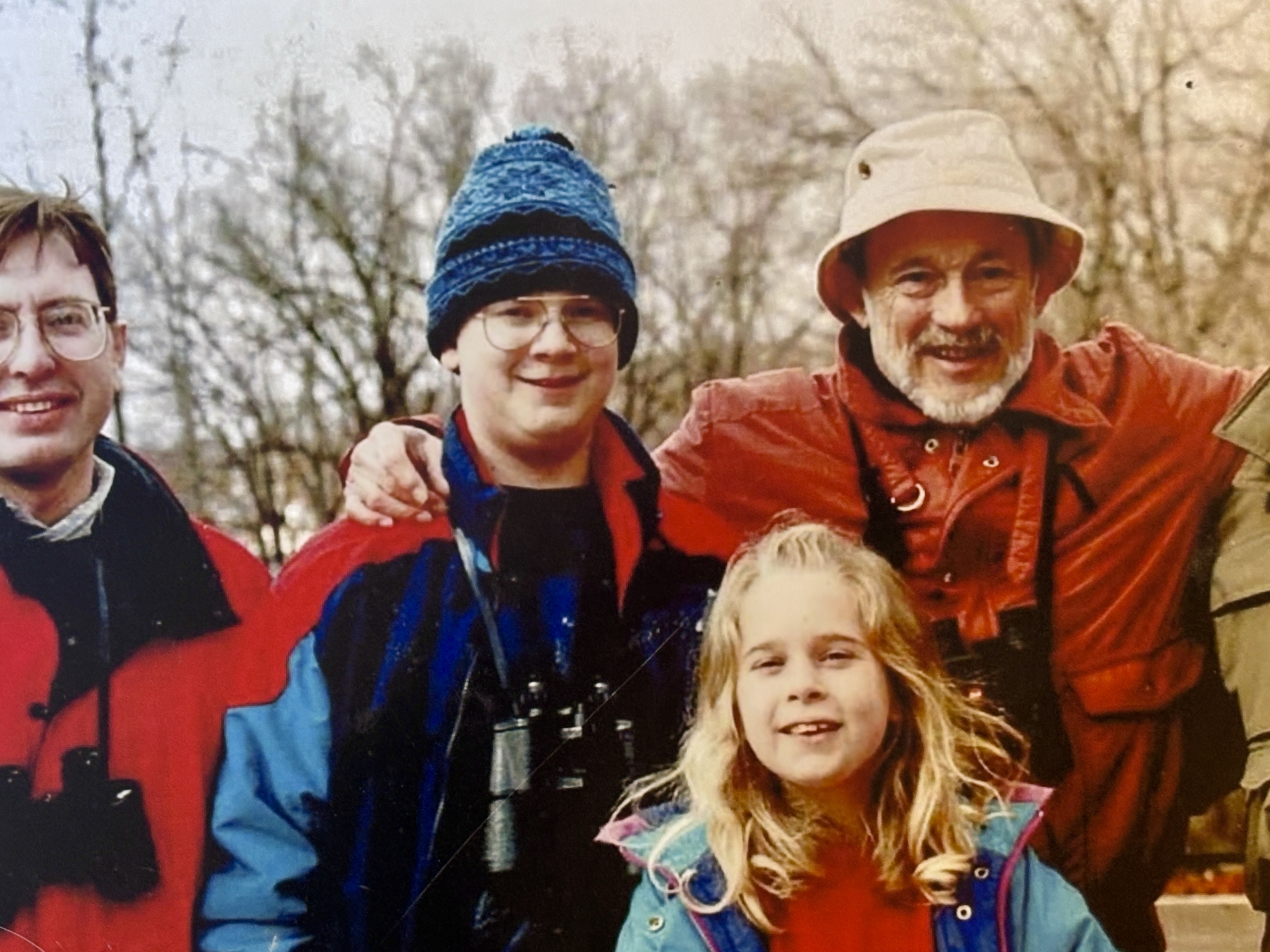
I started birding with Bud when I was about nine years old at Pokagon State Park. If you were there in those years, there was a repeatable pattern every Sunday morning. The Potawatomi Inn sun deck. Fred Wooley, the state park Naturalist, leading the weekly bird hike. Free coffee was just inside the sun deck doors, and Fred often had a reusable pan of cookies made by his wife Jackie.
Bud was always there. And usually, he had already been birding before the rest of us arrived. In many cases, he would head back out again after the hike ended. One walk was never enough to find all the birds.
From the State Line to the Metropolitan Core…
By vocation, Bud was a hotel manager and served as general manager of the Potawatomi Inn near the Michigan-Indiana state line for a decade. He understood people. He knew how to welcome them. He also lived on site, which meant walking the halls with him between birding outings felt different. He moved through at times in just penny loafers, unhurried, like he belonged there with the guests. He smiled and talked to guests. He sometimes turned TVs off, grumbling about wanting families to talk to one another while they were here in the State Park.
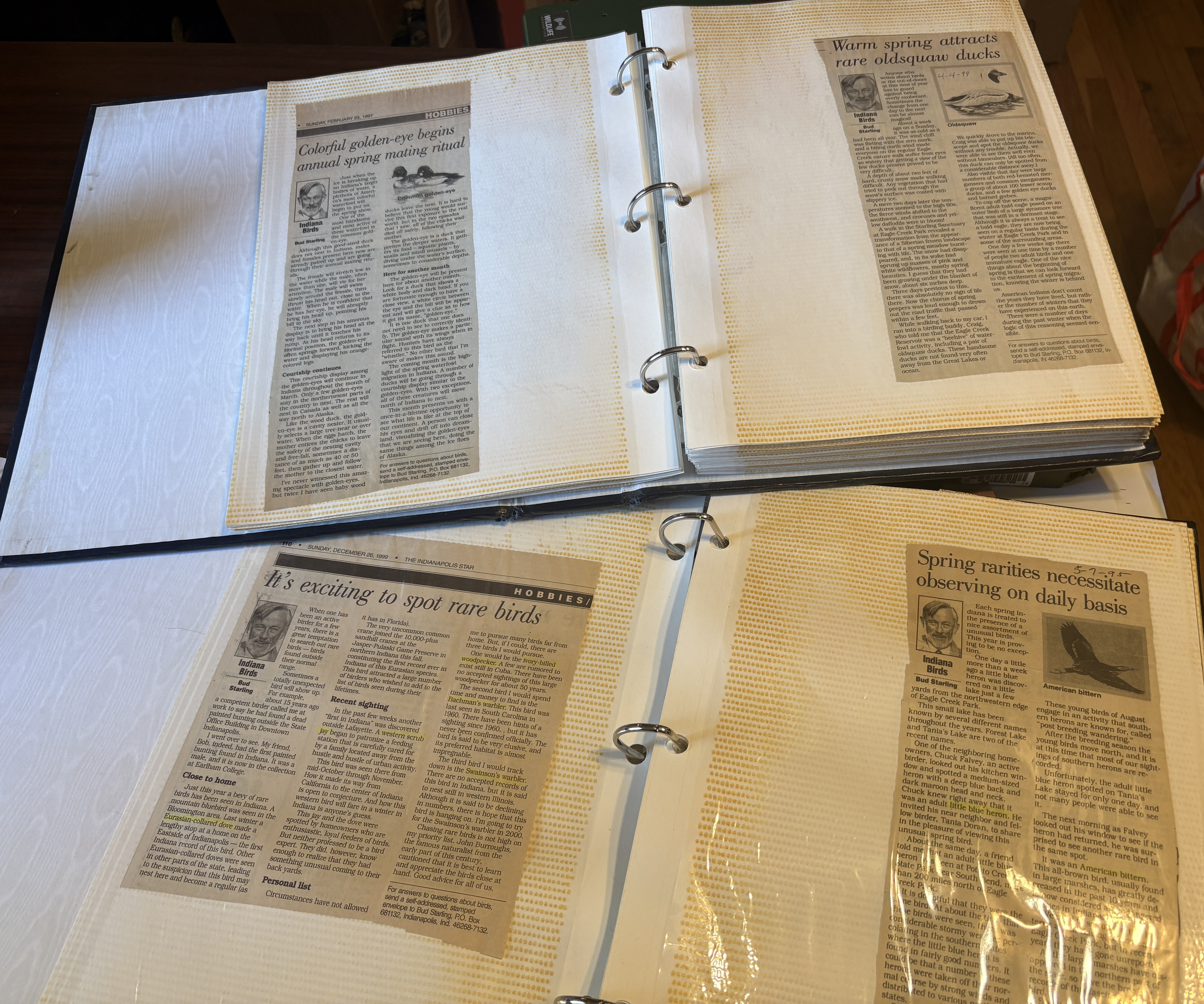
He wrote the “Indiana Birds” column for The Indianapolis Star, bringing migration, woodcocks, warblers, and backyard chickadees into Sunday morning living rooms across the state. For many Hoosiers, Bud was their first introduction to birding.
His writing sounded like the way he talked in the field. He was clear and observant, in a sort of Aldo Leopold kind of way. He wrote about chickadees surviving winter, and marveled at how a bird “weighing a few grams and having legs like matchsticks” could withstand the worst weather Indiana could throw at it. In another he urged readers to “go out to a meadowlike area about a half hour before sunset” and listen for the “peent!” of an American Woodcock. He was a constant recruiter.
…Bud Gifted Indiana Birding
As a nine- and ten-year-old tagging along on those Sunday hikes, I learned how to identify warblers and woodpeckers and learned a collection of “Bud-isms” that made absolutely no appearance in field guides. He also advised me to stay away from cigars and loose women.
He also insisted that for every lifer found, I owed him a beer. Not just any beer. Each one was to be labeled with the name of the bird that earned it. I’m sure what was 100+ beers later, I never repaid him.
Bud mentored without ever announcing that he was mentoring. He treated young birders like me like they belonged. He answered questions seriously, and sometimes, not so seriously.
Fred once shared a story that captures Bud’s spirit. Leading a group birding in downtown Indianapolis during migration, Bud had the group focused on a flicker flying overhead, the yellow underwings flashing. In an instant, a Peregrine Falcon darted from a tall building and snatched the flicker midair. Just above the group, the falcon released it. The flicker dropped at the birders’ feet. It was a shocking sight, as you can imagine. Years later, Fred found a lone flicker feather on an Indianapolis sidewalk and immediately thought of Bud. He carried it with him for the day as a reminder of what matters.
That was Bud’s gift to Indiana birding. Not just knowledge, but attention and mentoring. He died in December 2007. As we mark the anniversary of his birth some 98 years ago, it is worth saying plainly that he represents an important chapter in Indiana’s birding history. Before apps and alert systems, there were folks like Bud, consistently reporting in the weekly news to be delivered to folks’ driveways.
Local Legacy
Bud’s family legacy continues in the Indianapolis area. His written columns remain small time capsules of how we once experienced migration. And his mentorship lives on in every birder who now takes a kid into the field and says, “What do you see?”
For me, Bud Starling was not just part of Indiana birding history. He was the doorway. And if you listen closely on a spring evening, somewhere between the first “peent!” of a woodcock and the bright chatter of a Carolina Wren, you can still hear the echo of a birder named Starling inviting you to step outside.