By Jenna McElroy
Park Manager at the Eagle Creek Ornithology Center
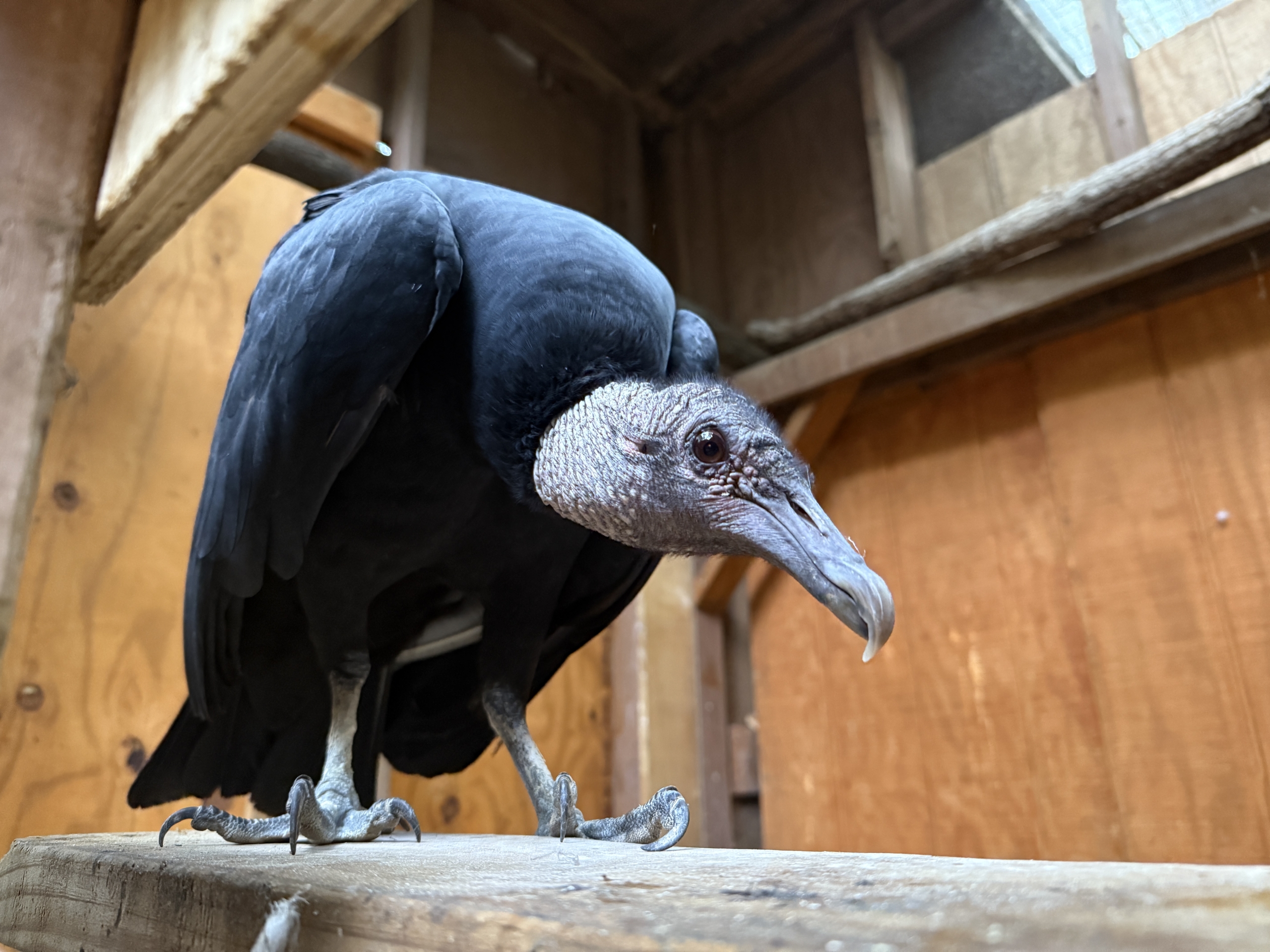
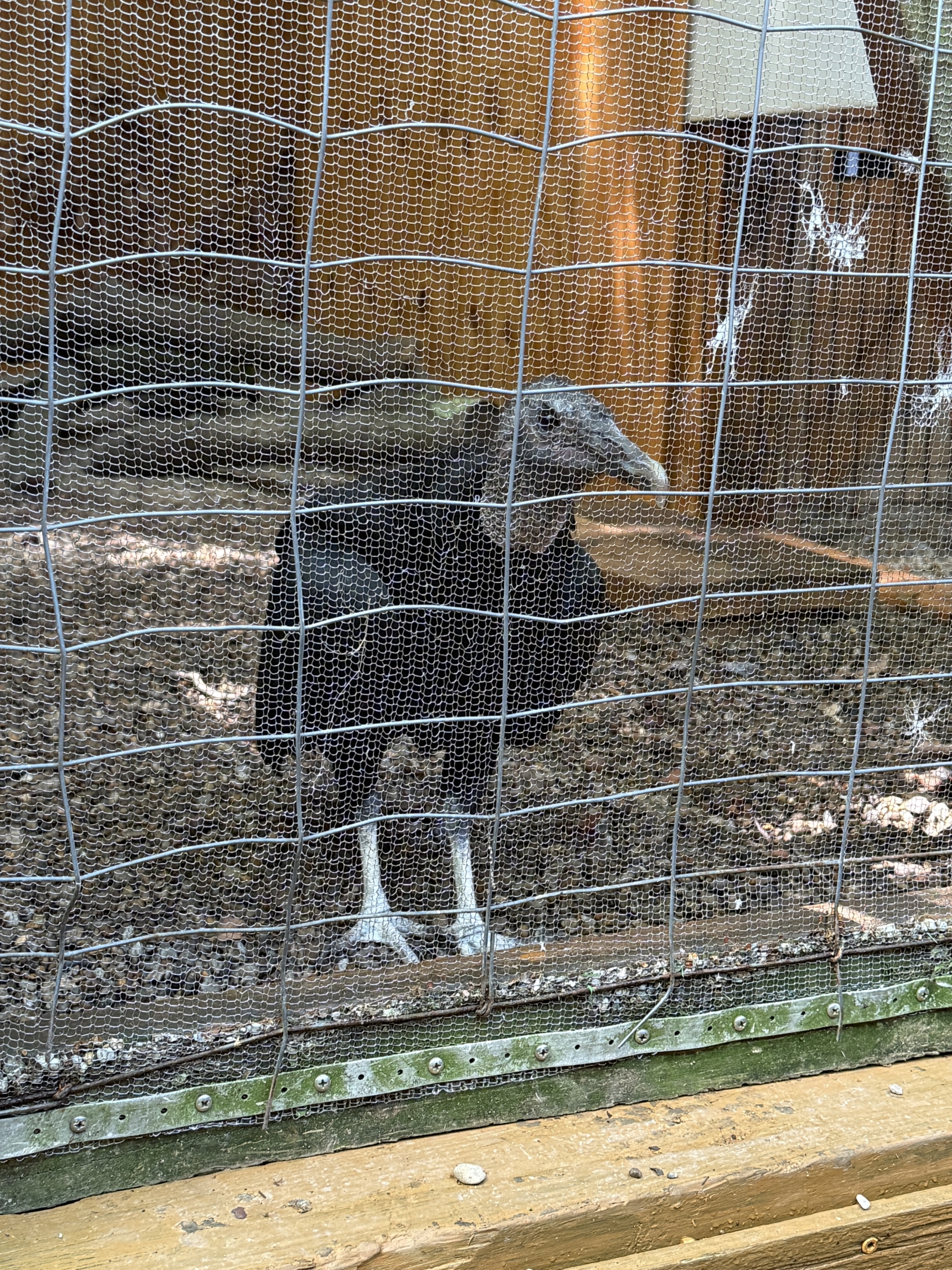
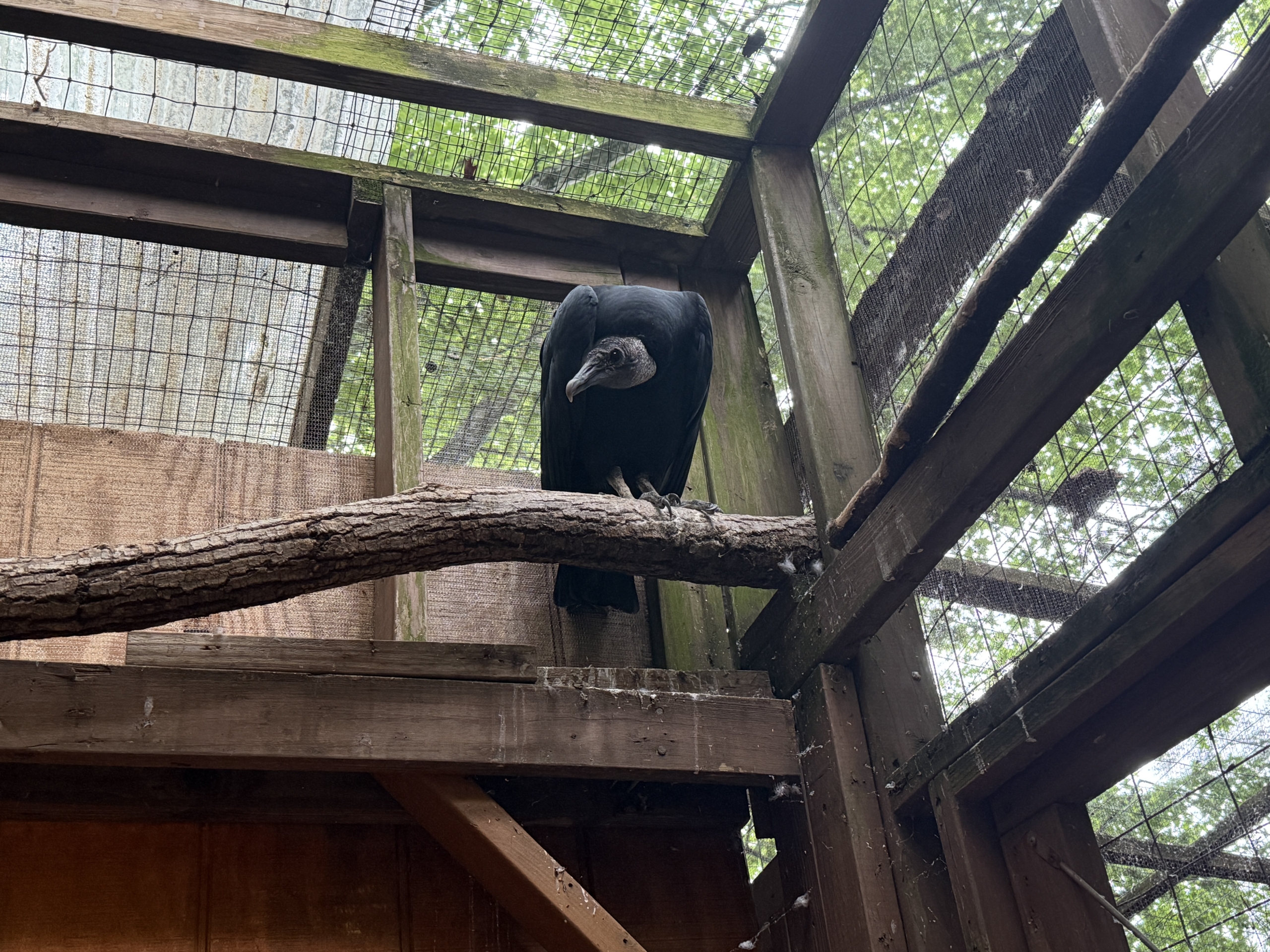
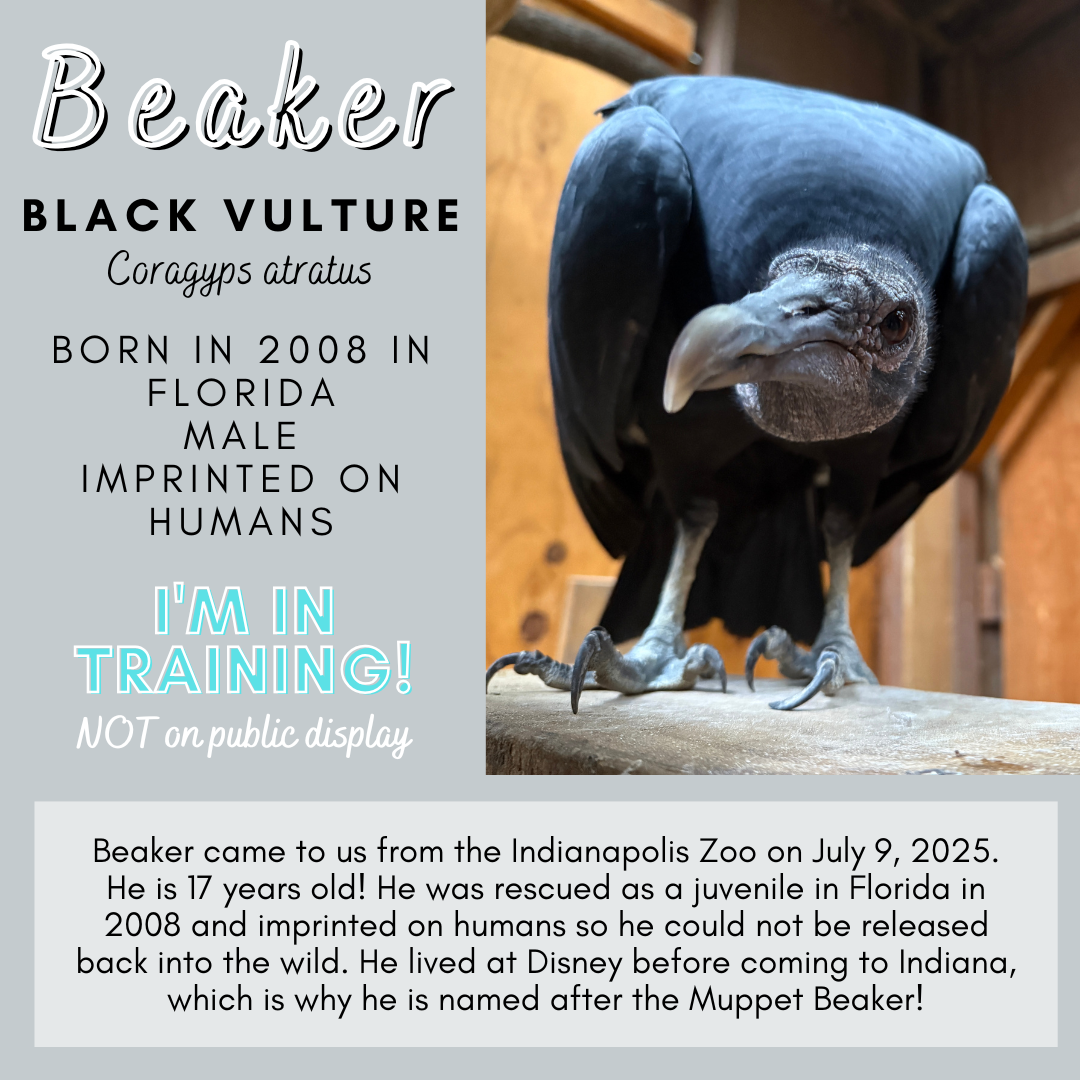
We are so happy to announce the adoption of a new Avian Ambassador at the Eagle Creek Park Ornithology Center: Beaker the Black Vulture! Beaker came to us from the Indianapolis Zoo on July 9, 2025. He was rescued as a juvenile in Florida in 2008 and became imprinted on humans so he could not be released back into the wild. He lived at Disney before coming to Indiana, which is why he is named after the Muppet, Beaker. He is currently 17 years old!
The Ornithology Center is now home to nine Avian Ambassadors: eight raptors and one pigeon. Several of these birds (not Beaker) are on exhibit for the visitors to see during park hours inside the Carlsen Aviary and they are regularly featured in educational lessons & experiences. All of these birds are non-releasable due to permanent injury or imprinting that prevents them from surviving in the wild. Eagle Creek Park is licensed under many different permits in order to house animals for education, including an Indiana DNR education permit (312 IAC 9-10-9.5), USDA Live Eagle Exhibition permit (16 USC 668 a), and USDA Class C Exhibitor under the Animal Welfare Act (7 USC 2131 et seq.) for birds and mammals. These permits take lots of work to uphold including annual reports, surprise inspections, vet approvals, contingency plans, meticulous record keeping, and more. Dawn VanDeman is not only the manager of the Earth Discovery Center, but is also the queen of all our permits, all while also being a licensed wildlife rehabilitator on her own time!
How We Met Beaker
The Indianapolis Zoo reached out to us in December of 2024 asking if we had space to adopt any of their raptor ambassadors that just weren’t thriving in the zoo environment (at no fault to zoo staff!) for various reasons, and Beaker was one of them! After having just adopted Albert the Pigeon, we decided that we had space for ONE more bird and that Beaker would be a great addition.
Black Vultures (and vultures in general) have a bad rap, and it is part of our mission to change that. If you’ve ever seen Matilda the Turkey Vulture at the OC watching hikers from her perch, sunning her wings, taking a bath, or doing long flights her aviary, you know what I mean! She has changed the hearts of many, converting vulture-haters to vulture-admirers, and made many friends. I am sure Matilda knows so many secrets from park visitors confiding in her. We LOVE vultures, and we think everyone else should too! Beaker was deeply loved at the Indianapolis Zoo as well, but after about three years, they decided that it just wasn’t the right fit for him. Beaker wants a quieter environment with fewer trainers and more one-on-one interaction, which is exactly what we plan to give him.
What is Imprinting?
Many people have asked us if Beaker and Matilda will be roommates, and the short answer is– no. Matilda is 13 years old and Beaker is 17, and neither of them have ever lived with another bird before, even another vulture. It could be potentially very dangerous for us to try to house them together. They are also both imprinted, meaning that they are more adapted to be with humans than their own kind and probably wouldn’t want to live with another bird.
Imprinting is a developmental stage in the brain when a young animal comes to recognize another animal, person, or thing as a parent, object of habitual trust, or conspecific. For birds, this cannot be reversed in their brains. That is why Beaker and Matilda are “non-releasable” and will never be able to learn how to be wild vultures. They know how to fly and we can teach them survival skills, but they will never want to be with other vultures or stay in the wild because they think they should be with humans.
THIS is why it is so important to call a licensed wildlife rehabilitator 100% of the time if you find an injured or orphaned baby bird. Even if you only “help” them for a few days, you can cause irreversible phycological damage to their young brain that will keep them from ever being able to fly free! Here is a list of Indiana licensed rehabbers. Rehabbers are busy though, so you can also call local exotic vets, such as Avian & Exotic Animal Clinic or All Wild Things, and they can often take the animal until they can get it to a rehabber.
We Love Vultures, and You Should Too!
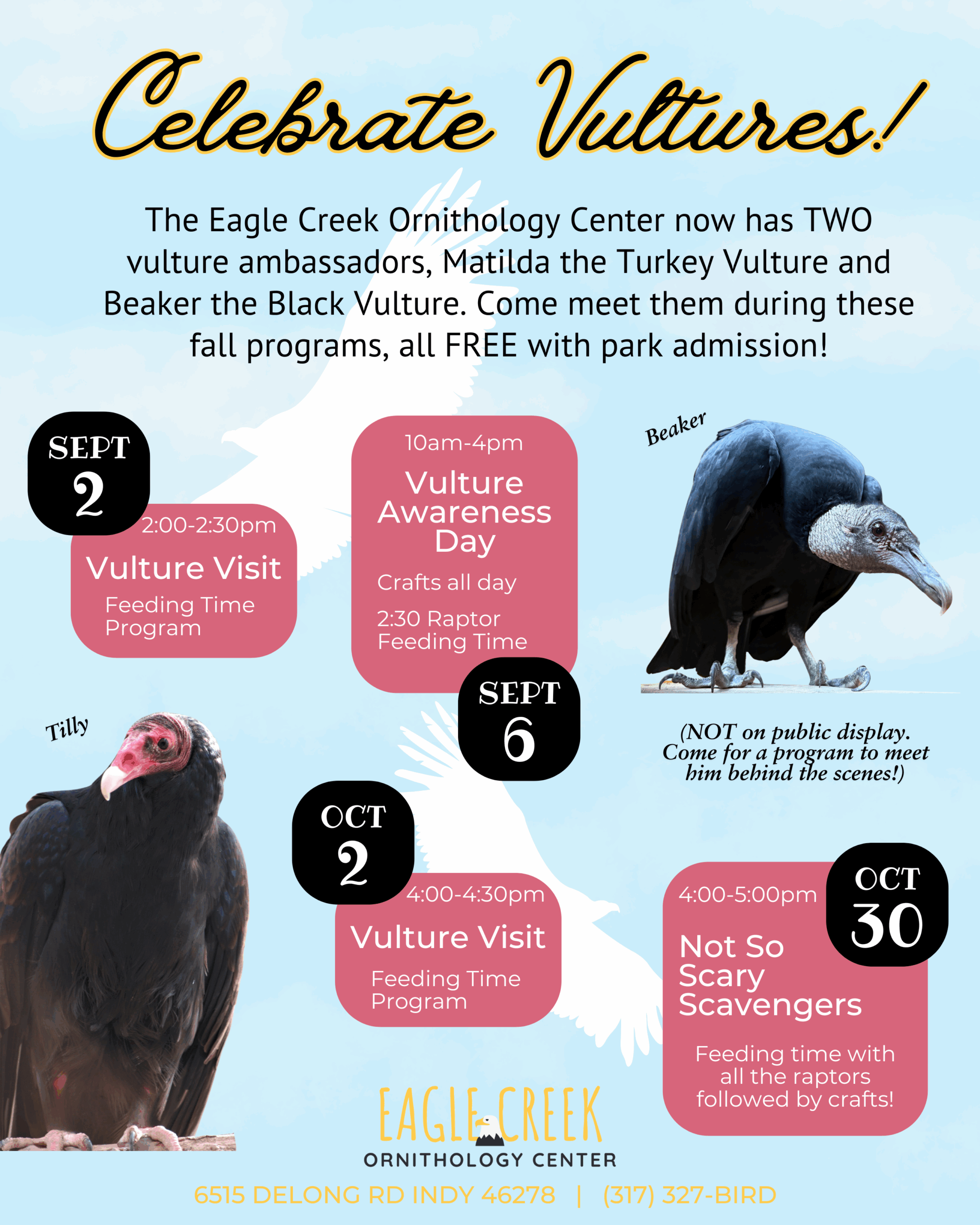
Beaker is NOT currently on exhibit for the public to view, but we have a lot of programs coming up in September and October where you can meet him in his private aviary, including this Saturday, September 6th!
Did you know that the first Saturday in September is International Vulture Awareness Day (IVAD)? “Started in 2006 by the Hawk Conservancy Trust (England) and the Endangered Wildlife Trust’s Birds of Prey Programme (South Africa), plus a range of partners and associates, IVAD has become a global event supported by the IUCN SSC Vulture Specialist Group; in 2016, 164 organizations from 47 countries participated. IVAD aims to create awareness about vultures as a whole, garner support among the public about the plight of vultures globally and highlight the work done by conservationists to protect these birds and their habitats.” Go to https://vultureday.org/ for more information!
Vultures are an ecologically vital group of birds that face a wide range of threats around the world including persecution, poisoning, collisions, and more. Of the 23 species of vultures, 16 are listed as Near Threatened, Endangered, or Critically Endangered. Vultures not only clean up dead/decaying matter but also help keep the world more disease-free! Vulture stomachs can kill almost any virus or bacteria (even rabies!), which keeps diseases from spreading to other animals or humans in the area.
The message of International Vulture Awareness Day to “save all the vultures” seems daunting, but there are a lot of little, easy things you can do in your own home and when out in nature to protect our local vultures, raptors, and wildlife!
- NEVER USE RODENTICIDES – Rodenticides (rat and mouse poisons) are toxic products that cause severe health damage and even death in nontarget wildlife, pets, and people. Because rodenticides kill the rodent or target animal slowly, they also kill anything up the food chain that eats that poisoned rodent. If you use rodenticides in your home, you are likely poisoning all of the raptors, owls, scavengers, foxes, feral pets, and other essential and adorable animals in your backyard.
- SWITCH TO NON-LEAD AMMUNITION – Many of us know about the negative effects of lead paint, which is why we don’t use it in our homes anymore. However, did you know that lead poisoning is one of the leading factors of death for vultures, California Condors, and eagles? When deer are field dressed, fragments of lead can remain in gut piles that are left behind. Also, if a wounded deer cannot be retrieved, it may die with lead fragments in its body. If you are a hunter, please consider switching to non-lead ammunition!
- DON’T LITTER – Trash and food scraps that end up on the sides of roads attract animals, which can be killed by passing cars and then attract scavengers. Properly throwing away your trash, organizing clean-up events, and moving roadkill off the side of the road (when it’s safe to do so) can help prevent vulture collisions and deaths!
- BUY VULTURE MERCH – Buying vulture-themed gear from vulture conservation organizations helps bring funds and awareness to the cause and helps you showcase your love for vultures!
You can donate to our Avian Ambassadors here: https://members.eaglecreekpark.org/products/donate-to-the-ornithology-center-oc.
And come celebrate vultures and meet Beaker during these fall programs at the Ornithology Center: https://anc.apm.activecommunities.com/indyparks/activity/search?onlineSiteId=0&activity_select_param=2&activity_keyword=vulture&viewMode=list and https://anc.apm.activecommunities.com/indyparks/activity/search?onlineSiteId=0&activity_select_param=2&activity_keyword=scavenger&viewMode=list