By Olivia O’Neal
Communications Intern with Central Indiana Land Trust, Inc.
ABAS donated $25,000 toward Central Indiana Land Trust’s purchase of Fern Station Nature Preserve.
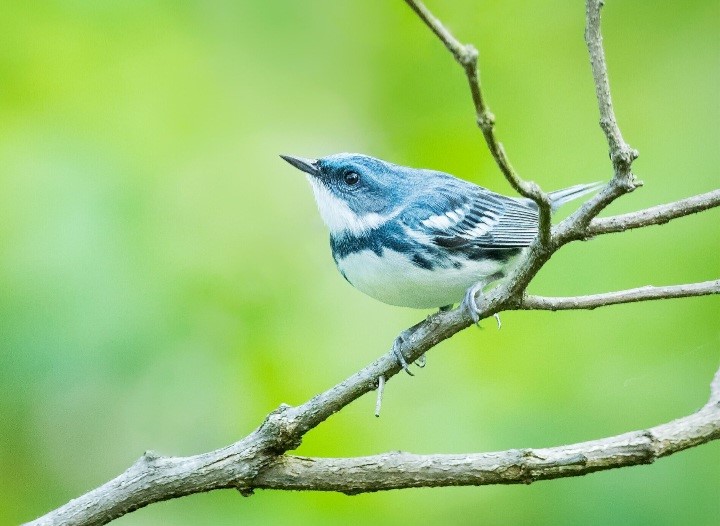
In Fern Station, there were 14 flutters of blue. They weren’t bluebirds, they were Cerulean Warblers—a state-endangered species with 14 nesting pairs at Fern Station. To put that in perspective, CILTI president and CEO Cliff Chapman said that their 300-acre Trafalgar property, Betley Woods at Glacier’s End usually only has one. Hearing the buzzing chirp of several Cerulean Warblers at once in Fern Station is something he said he’s never experienced.
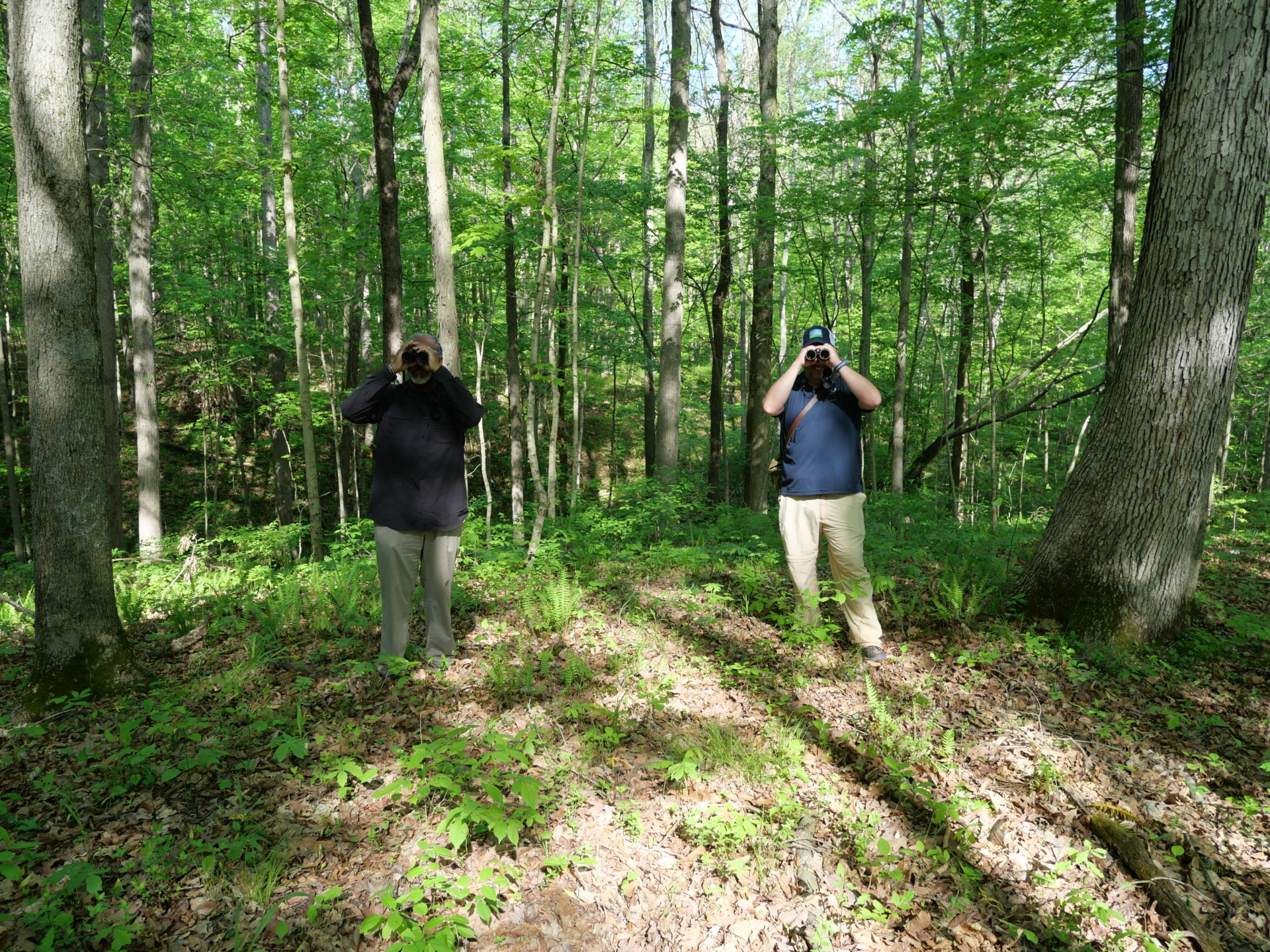
In June of 2024, Cliff got out his binoculars and recorded how many of each bird species were nesting at Fern Station—conducting CILTI’s first breeding bird inventory at Fern Station.
“This place is special—and I left each day feeling a bit emotional about the whole thing,” he said. “The place is just amazing.”
That day, Cliff also saw eight Hooded Warblers—bright yellow birds with their heads wrapped in the shape of what looks like a little black bird balaclava. He spied one Worm-eating Warbler, an olive-brown bird with a black striped head, and found a Red-shouldered Hawk—a powerful raptor with, you guessed it, red shoulders.
It wasn’t until slowly driving away with the car windows down that Cliff heard a Black-and-white Warbler—a bird with a zebra-like pattern more commonly found in Brown County.
Local Observers Can Attest to the Success
Rod Wilson has also noticed the incredible avian wildlife variety of Fern Station. He’s the leader of the Putnam County Big Walnut Bird Club and a member of the Indiana Audubon Society (along with his wife Melissa). He’s gotten permission to bird watch on the property and hasn’t been disappointed. He’s heard Hooded Warblers, the olive and yellow Kentucky Warbler, the orange patched American Redstart, and the Ovenbird—named for the oven-shaped nest it builds.
Warbler species like the Cerulean Warbler have been experiencing a population decline in the state especially on account of habitat loss. Worm-eating Warblers, Black-and-white Warblers, and Hooded Warblers are listed as special concern in the state due to their declining numbers. All of these species have found refuge in Fern Station.
Aside from warblers, both Cliff and Rod have seen Red-eyed Vireos, Acadian Flycatchers, and the more common backyard birds like Northern Cardinals and American Robins although in fewer numbers. Cliff saw no goldfinches, House Sparrows, or European Starlings. The absence of these species reduces competition for threatened species.
Why Birds in Decline Thrive at Fern Station
Fern Station is 570 acres of a mix of mature woods, forest, and scrub areas with creeks twisting through the property providing a constant source of water. It’s currently only open for arranged tours and events but is not yet fully open to the public.
“It is by far the largest purchase in our history and will be one of the largest stand-alone state-dedicated nature preserves in Indiana (that is, not housed within a state park or other property),” Cliff said.
Rod said the preserve provides great habitat for a variety of bird species and other wildlife to flourish. It supports migratory stopovers for woodland birds too, like the brown-speckled Swainson’s and Hermit Thrushes. The area is covered with white oak trees, which are perfect homes for a lot of insects—a convenient food source for birds and one reason for the vast avian diversity.
Another reason could be the lack of development and consequential reduction of human and wildlife interactions, Rod said. Fern Station is remote, densely wooded, and brushy. Similar to other areas in Putnam County like Big Walnut Nature Preserve, Fern Cliff nature preserve, and Deer Creek Fish and Wildlife Area, there are few houses and developed areas around it. This means less traffic, less trash, and less disturbance of the overall habitat and wildlife.
Fern Station also has a history of sustainable deer hunting. Deer overpopulation can lead to overgrazing and damage critical vegetation that provides habitat for birds and the insects they feed on. Hunting has helped manage the population in the area so that other organisms can thrive. This, combined with the location, further make Fern Station an ideal home for wildlife. Indiana is also in the Mississippi Flyway, a major migration route for birds like migratory warblers. Fern Station is an ideal resting place for birds to rest and refuel.
The variety of wildlife that one property can support further illustrates the importance of conserving land. Fern Station may have been logged and split into hunting lots. The Next Level Conservation Trust, help from The Nature Conservancy and the Amos Butler Audubon Society among others, and a perfectly timed phone call that Cliff made to the original property owner played a key role in saving Fern Station.
In June 2022, the property’s value was foreshadowed when a CILTI team visited and heard an Ovenbird, Kentucky Warbler, Hooded Warbler, and Wood Thrush before even leaving the car. Later, returning to the property, Cliff saw two Pine Warblers—possibly a county record.
Plans to Manage Even More Bird Habitat
CILTI is working to protect more land around Fern Station and has identified the areas of the preserve that restoration efforts should be focused on. There are areas in the preserve that were minorly logged in the past, removing valuable oak and hickory trees. The result is a reduction in forest diversity. Removing oak and hickory trees also creates a thin canopy and opens up the forest floor to light. This then invites faster growing trees (such as tulip poplar, sugar maple and sassafras) and invasives, all of which prevent oak and hickory trees from regenerating. It’s these areas that CILTI is focusing restoration efforts on.
The goal is to get invasives like Japanese stiltgrass under control so that CILTI only has to come back for management a few times a year. Invasives like multi-flora rose, autumn olive, and bush honeysuckle are spread by birds because they feed on their fruit and deposit the seeds throughout the woods. It’s important to manage the habitat so that, in the long term, it continues to support the avian wildlife.
Today and in the future, the property shows the rainbow of wildlife that Indiana can be home to. Individual warblers, much like their large spectrum of colors, require a large spectrum of habitats—and that is something Fern Station can provide.